
I’ve been on plant floors where the equipment ran fine, the crew did their job, and production still stalled because the floor failed. Seams opened. Corners curled. Water crept where it shouldn’t. And suddenly uptime depended on flooring decisions made months earlier, often by someone who never had to work on it.
Vinyl flooring types come up more than people expect in industrial environments. Maintenance shops. Control rooms. Clean zones. Utility corridors. Even light-production areas. When someone says “vinyl,” they usually mean four very different systems: sheet vinyl, LVT, LVP, and SPC. They behave differently under load, moisture, traffic, and abuse. Ignore that, and you pay for it later.
This isn’t a style discussion. It’s about performance, replacement cycles, and avoiding shutdowns tied to preventable flooring failures.
Sheet Vinyl: Seam Management Is the Whole Game
I’ve seen sheet vinyl perform well for years. I’ve also seen it fail fast. The difference usually comes down to seams and substrate prep.
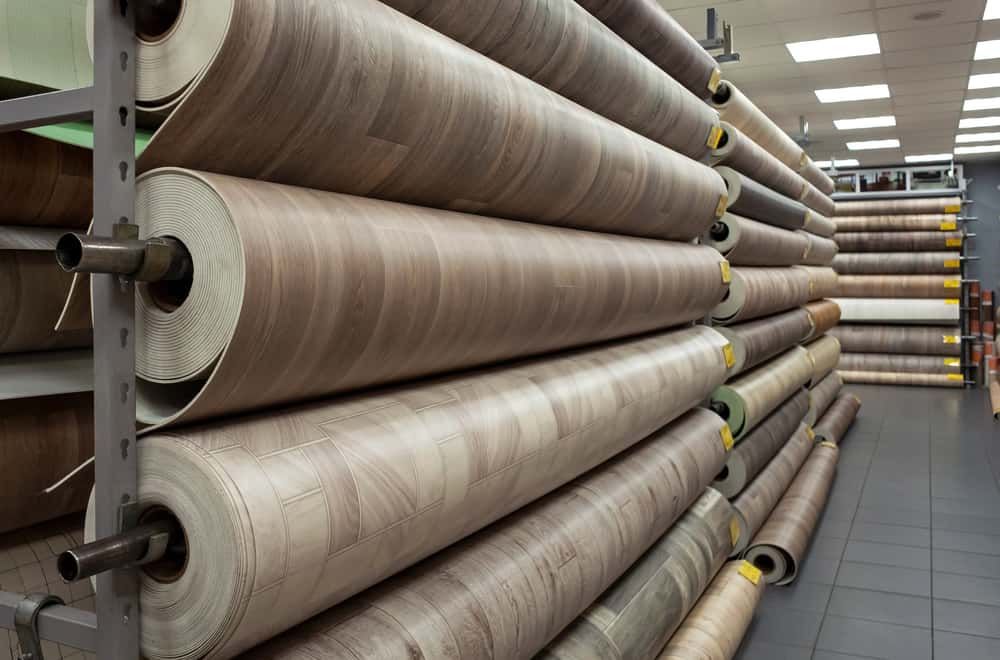
Sheet vinyl runs continuously. Fewer joints. Fewer entry points for water, chemicals, and grime. In washdown zones, labs, or areas where spills happen without warning, that matters. A lot.
But when installers rush prep or ignore expansion, sheet vinyl telegraphs every mistake. Trapped moisture shows up later. Poorly welded seams open under rolling loads. That’s when maintenance gets called. Again.
Sheet vinyl works when:
-
The slab is flat, dry, and stable
-
Seams are welded by someone who knows what they’re doing
-
Traffic stays predictable
When it fails, it fails quietly at first. Then the edges lift. Then water gets underneath. That’s when production stops.
LVT (Luxury Vinyl Tile): Modular, Forgiving, and Frequently Misused
LVT shows up everywhere now. Control rooms. Office-adjacent spaces. Mezzanines. It gets chosen because it looks clean and installs fast.
Here’s the hard truth. LVT forgives bad planning more than other vinyl types, but it punishes lazy execution.
Tiles mean more joints. More joints mean more movement. Under frequent rolling traffic or temperature swings, poorly locked tiles creep. I’ve seen it happen on jobs where everyone assumed “light duty” meant no risk.
LVT earns its place when access matters. One damaged tile can be replaced without tearing up half the room. Procurement teams like that. Maintenance teams, too.
But in practice, LVT belongs in controlled environments. Not forklift paths. Not wet zones. Not areas where loads change week to week.
Choose it knowingly. Or don’t choose it at all.
LVP (Luxury Vinyl Plank): Directional Loads Change Everything
LVP behaves like LVT’s longer, moodier cousin. Same material family. Different stress patterns.
Planks react to directional traffic. Repeated turning, pivoting, or dragging loads hit the locking systems harder. I’ve been on jobs where planks looked fine for months. Then the corners started clicking loose. Same story every time.
LVP can work in industrial-adjacent spaces. Training rooms. Supervisor offices inside plants. Transitional areas where durability still matters, but abuse stays limited.
The mistake I see repeatedly? Treating LVP like sheet vinyl because it “feels solid.” It isn’t. It needs room to move and conditions to stay stable. Ignore that, and the floor reminds you.
Responsibility sits with whoever approved it without understanding how the space actually gets used.
SPC (Stone Plastic Composite): Rigid Core, Less Forgiveness
SPC gets attention because it feels tough. Dense core. Minimal flex. High-dimensional stability. On paper, it solves problems.
In practice, SPC reduces some risks and introduces others.
The rigid core handles temperature swings better than LVT or LVP. Heavy static loads leave less imprint. That’s the real value in plants where climate control isn’t perfect.
But SPC transfers imperfections instead of absorbing them. Subfloor flatness matters more. Miss it, and you feel every deviation underfoot. I’ve watched crews complain about “hard spots” only to trace it back to rushed prep.
SPC performs when the foundation work gets the same respect as the finish. Skip that, and no material spec saves you.
The Mistake That Keeps Repeating
Here’s the pattern I’ve seen for years. Flooring is often chosen late, often after equipment layouts are locked sometimes, after procurement squeezes the budget.
Then the floor is asked to survive conditions it was never selected for.
That’s not a material failure. That’s a decision failure.
At Responsive Industries, conversations around flooring usually start earlier. Not because flooring is exciting. Because it affects access, safety, maintenance, and long-term reliability. Decisions get made with the whole operation in view, not just the spec sheet.
I’ve been on installs where stopping for one extra day of prep prevented years of patchwork repairs. And others where rushing saved a week and cost ten times more later.
How Plant Managers Should Look at Vinyl Flooring Types
From an operations standpoint, vinyl flooring choices should answer a few blunt questions:
What happens when this floor gets wet?
What happens when traffic patterns change?
What fails first, and how hard is it to fix?
Who owns the problem when it does?
If those answers feel vague, the risk stays high.
Vinyl flooring can serve industrial environments well. Or become a recurring headache. The difference shows up long after install crews leave.
And that’s usually when no one remembers who signed off on it.
FAQs
1. Which vinyl flooring type handles moisture best in industrial settings?
Sheet vinyl, when seams are welded correctly, and the substrate stays dry.
2. Is SPC suitable for light industrial areas?
Yes, when subfloor prep meets flatness requirement,s and loads remain predictable.
3. Why do LVT and LVP fail under rolling loads?
Locking systems loosen under repeated directional stress and movement.
4. Can damaged vinyl flooring be repaired without shutdowns?
Modular systems like LVT allow targeted replacement. Sheet vinyl usually doesn’t.
5. What causes most vinyl flooring failures in plants?
Late-stage selection and rushed substrate preparation.
6. Who should be involved in flooring decisions?
Operations, maintenance, safety, and procurement. Not just design.